Thailand DTV Visa Tax Guide 2026: What Remote Workers Actually Pay
The Destination Thailand Visa explained — tax residency rules, what income is taxable, and how to minimize your Thai tax bill.
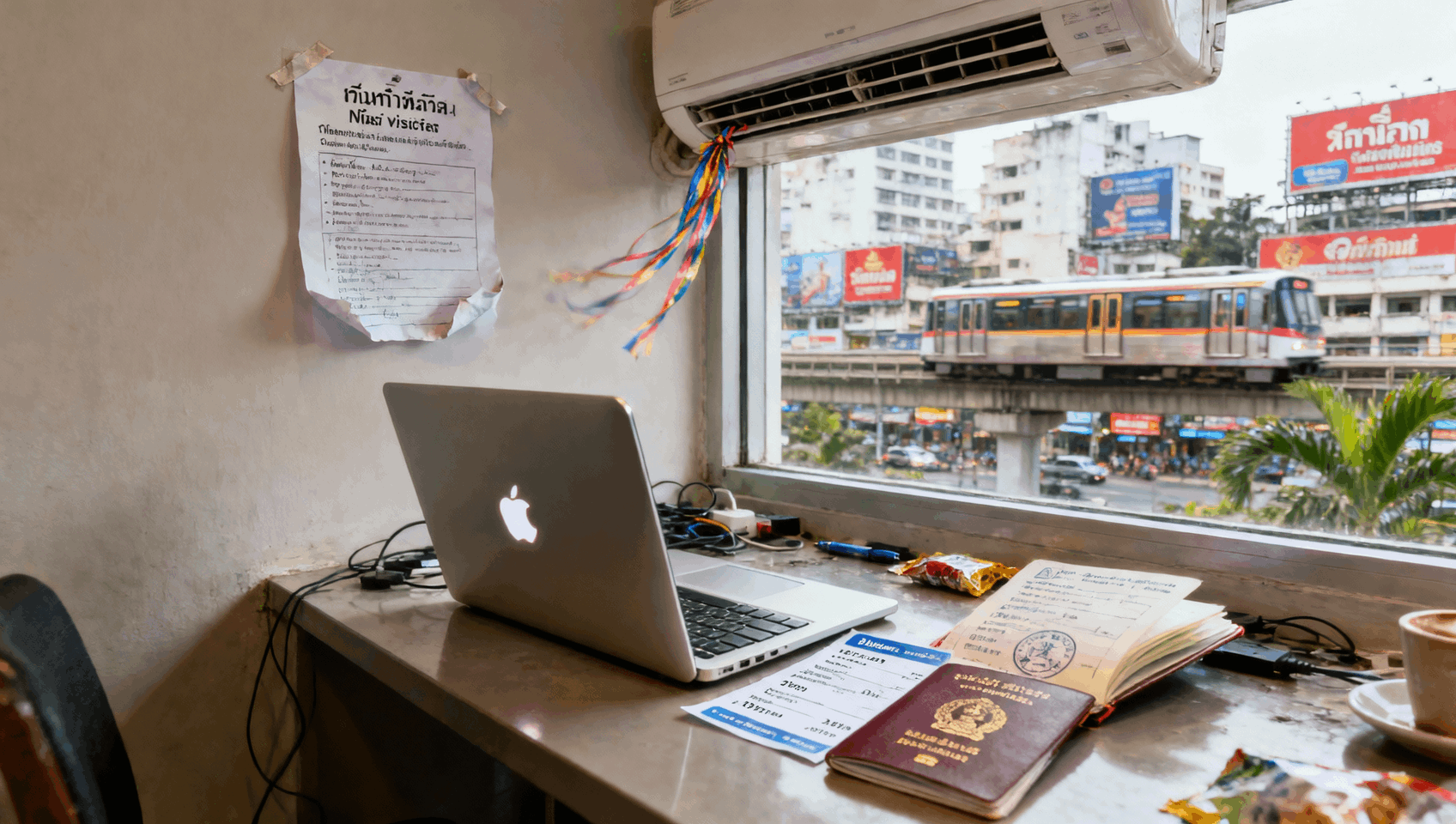
I've spent 8 months of every year in Thailand since 2021, and the gap between what the law says and what nomads actually do is wider here than anywhere else in Southeast Asia. Let me walk you through both — the rules and the reality.
The DTV Visa: Thailand's Nomad Playground
Thailand launched the Destination Thailand Visa (DTV) in mid-2024, and it's the best thing to happen to Southeast Asia nomads in years. 5-year validity, multiple entries, stay up to 180 days per entry (extendable by another 180 days for ฿1,900).
Income requirement: ฿500,000 (about $14,000 at current rates) in your bank account — roughly ฿41,667/month or $1,400/month. That's less than half of Portugal's requirement. The catch is you need to show the lump sum, not monthly income. Some embassies accept 6 months of statements showing equivalent income; others demand the full ฿500K sitting in an account.
The real draw: you can work remotely for foreign companies without needing a Thai work permit. This is explicitly stated in the DTV regulations. No gray area, no "technically illegal but nobody checks." The DTV is Thailand finally admitting that remote workers cross their borders and they'd rather collect visa fees than pretend it's not happening.
Visa cost: ฿10,000 (about $280) for the first year, ฿5,000/year for extensions. Cheap by global standards.
The 180-Day Tax Residency Rule
Here's where things get fuzzy. Thai tax law says you're a tax resident if you spend 180 days or more in Thailand in a calendar year. Once you cross that threshold, you're supposed to declare and pay tax on foreign-sourced income that you remit into Thailand in the same year.
The key word is "remit." If your US client pays into your US bank account and you never bring that money into Thailand, Thailand has no claim on it. In 2024, the Revenue Department changed the rules to tax remitted foreign income regardless of when it was earned, closing a loophole where people would remit previous years' savings.
The practical problem: how does Thailand know about your foreign income? It generally doesn't. The tax system relies heavily on self-reporting and withholding. If your income never touches a Thai bank except for small transfers, the Revenue Department has low visibility. But "low visibility" isn't the same as "legal." I know a British developer who got audited because his Bangkok condo purchase triggered a financial review. The audit covered 3 years of remittances and the penalty was ฿560,000 (about $15,600) in back taxes plus 1.5% monthly interest.
Progressive Tax Rates: 0% to 35%
If you do file, here's what you're looking at:
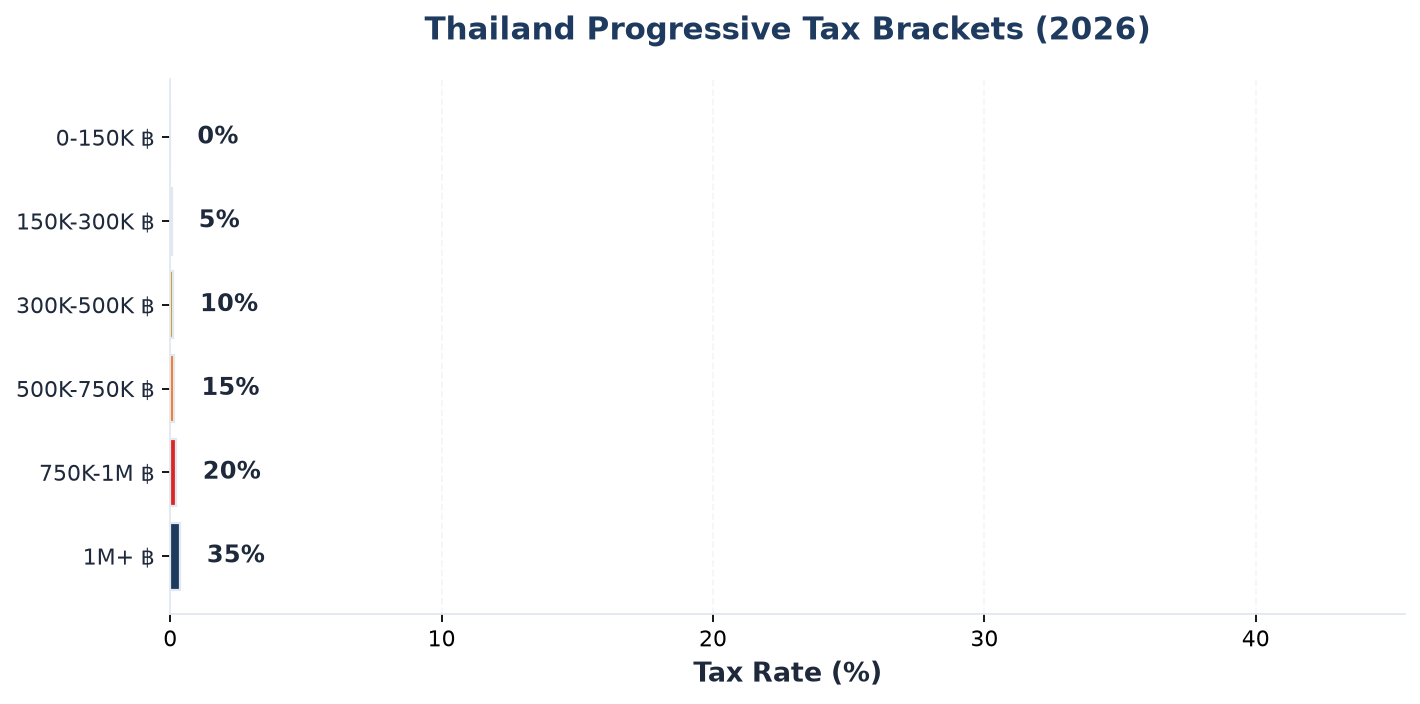
- 0-฿150,000: 0% (exempt)
- ฿150,001-฿300,000: 5%
- ฿300,001-฿500,000: 10%
- ฿500,001-฿750,000: 15%
- ฿750,001-฿1,000,000: 20%
- ฿1,000,001-฿2,000,000: 25%
- ฿2,000,001-฿5,000,000: 30%
- Above ฿5,000,000: 35%
At ฿2,000,000/year (about $55,600), your tax would be roughly ฿187,500 — about 9.4% effective. That's absurdly low by European standards.
At ฿1,000,000 (about $27,800), it's roughly ฿52,500 — about 5.25% effective. The Thai progressive system is genuinely generous at low-to-moderate incomes.
Standard deductions reduce taxable income further: a personal allowance of ฿60,000 plus a ฿100,000 expense deduction for employment income. These bring the effective rates even lower.
Social Security and Hidden Costs
Social Security is laughably cheap: ฿300/month (about $8.40). Total. No tiers, no income-based scaling. This covers basic healthcare through public hospitals, disability coverage, and a tiny pension. Private health insurance runs ฿15,000-30,000/year ($420-840) depending on age and coverage level — still cheap.
Dividend and capital gains treatment: foreign dividends and capital gains are taxable only if remitted into Thailand in the same year they're earned. Thai-source dividends get a 10% withholding. Capital gains on Thai stocks are taxed at personal rates, though I've never met a digital nomad with a Thai brokerage account.
The Reality Most Nomads Live In
I'll be direct: the majority of long-term nomads in Thailand don't file Thai taxes. They keep their income in foreign accounts, transfer living expenses only, stay under 180 days in some years by timing their entries, or simply ignore the obligation.
Is this smart? No. Thai tax enforcement is inconsistent but not nonexistent. The Revenue Department has been stepping up digital cross-referencing since 2024 — they now have access to bank transaction data through automated reporting systems. The introduction of CRS (Common Reporting Standard) information sharing means Thailand can theoretically access your foreign bank records, though implementation is slow.
The real risk isn't prosecution — Thai authorities almost never prosecute foreign tax evasion criminally. The risk is financial: back taxes, penalties of 1.5% per month, and possible visa revocation if the DTV renewal flags a tax discrepancy. A 2025 case in Chiang Mai saw a French DTV holder denied renewal after the Revenue Department flagged 3 years of undeclared remittances totaling ฿3.4 million.
What I Actually Recommend
If you're making under $50,000/year and spending significant time in Thailand, the compliance path is straightforward and cheap. File a tax return. The tax you'll pay is probably 5-8% of income. That's less than what you'd pay for a decent meal in Copenhagen.
If your income is higher or your financial situation is complex, hire a Thai tax consultant — they cost ฿15,000-30,000 per filing and are worth every baht. The firm I use in Bangkok charges ฿20,000 and has saved me 4x that in correctly structured deductions.
The Thailand playbook works best if you:
- Keep your primary income in foreign accounts
- Transfer only what you need for living expenses
- Stay under 180 days in years when you want to keep things simple
- File honestly if you cross the threshold — the tiny tax bill is worth the peace of mind
Thailand's tax environment is the best deal in Southeast Asia for remote workers who structure things properly. The rates are low, enforcement is manageable, and the DTV finally makes the whole arrangement legally clean. Just don't confuse "nobody checked last year" with "nobody will ever check."
Calculate your tax in this country
Use the TaxEd Abroad calculator to see exactly what you would pay.
Try the calculatorRelated Articles
Indonesia (Bali) Remote Worker Tax Guide 2026
Working from Bali? Here's the real tax situation for digital nomads, what the E33G visa requires, and strategies to stay compliant.
UAE Remote Work Visa: The Truth About Tax-Free Living in 2026
The UAE introduced a 9% corporate tax in 2023. What does that mean for digital nomads? Here's the complete breakdown.